The MBBS degree itself typically takes five years of full-time study. However, the full journey to becoming a registered doctor in Malaysia can span approximately eight to nine years when you include pre-university preparation and the post-graduation training and service requirements.
This broader timeline is useful for planning because it reflects what most students experience from SPM or O-Levels to working as a fully registered doctor.
The direct answer to how many years to study MBBS in Malaysia is five years. The MBBS programme is designed as a full-time course that builds knowledge and clinical competence step by step. Most universities structure it into a pre-clinical phase and a clinical phase. The pre-clinical phase usually covers Years 1 and 2, while the clinical phase usually covers Years 3 to 5.
This five-year design is important because it shows that medical education in Malaysia is not only about passing exams. It is also about progressively developing the skills needed to diagnose, manage, and treat patients in real clinical settings.
An MBBS degree in Malaysia typically takes five years because the programme is split into two main phases that serve different learning goals. The shift between phases is deliberate, and it mirrors how a medical student moves from learning medical science in an academic environment to applying it in hospitals.
The pre-clinical phase usually takes place in Years 1 and 2. During this period, students focus on the basic medical sciences that form the foundation of clinical practice. This phase emphasises academic understanding and helps students build a structured way of thinking about the human body and disease.
In this stage, students typically learn subjects such as anatomy, biochemistry, and physiology. These subjects are taught in an academic setting, and they prepare students for the next stage of training. The transition into clinical learning is smoother when the basic sciences are well understood, because clinical reasoning depends on knowing how normal body systems work and what changes when illness occurs.
At the end of Year 2, students are usually required to pass the First Professional Examination. This examination is a major checkpoint, and it marks the end of the pre-clinical phase. Passing it signals that a student is ready to move into the clinical environment and apply foundational knowledge to real patient situations.
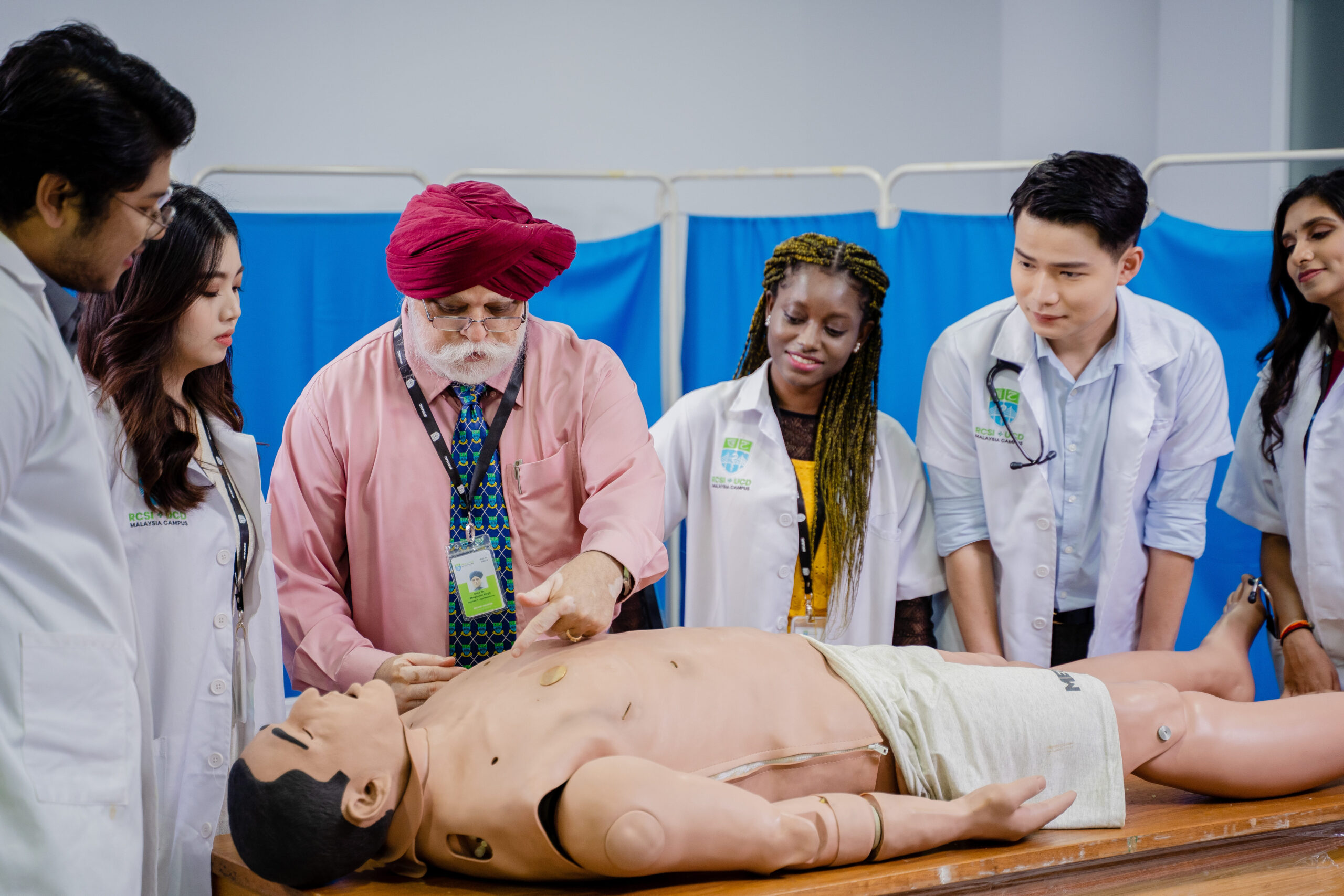
The clinical phase typically occurs in Years 3 to 5, focusing on hands-on training in hospitals. This is where students begin to learn medicine through practice, observation, and supervised participation in clinical work. The clinical phase is crucial because it develops the practical competence necessary to function safely and effectively in healthcare settings.
During these years, students rotate through different hospital disciplines to gain exposure to a wide range of medical conditions and patient needs. Typical clinical rotations include Surgery, Paediatrics, and Internal Medicine. These rotations help students learn how to take patient histories, perform examinations, interpret findings, and participate in patient management under supervision.
At the end of Year 5, students are usually required to pass the Final Professional Examination. This final assessment is a key milestone because it confirms that the student has achieved the expected knowledge and clinical readiness to graduate with an MBBS degree.
Many students begin by asking about the MBBS duration, but the more practical planning question is how long it takes to become a registered doctor after secondary school. When you consider the required steps before entering MBBS and the required steps after graduation, the full journey commonly spans eight to nine years from completing secondary school.
This timeline typically includes pre-university study, the five-year MBBS degree, and the post-graduation pathway that leads to registration and service.
After completing SPM or O-Levels, aspiring medical students usually take one to 2.5 years of pre-university studies before they can enter an MBBS programme. This stage exists because medical schools require academic preparation in science-based subjects. It also gives students time to build the study discipline needed for a demanding professional degree.
Common pre-university pathways include Foundation in Science or Matriculation, which usually takes about one year. A-Levels or STPM commonly take about 1.5 to 2 years. A Diploma in Health Sciences can take approximately 2.5 years. Students typically need to meet specific entry requirements, such as minimum grades, often including Biology, Chemistry, and Physics or Mathematics. These requirements matter because medicine is academically rigorous, and universities use them to ensure students are ready for the pace and complexity of the MBBS curriculum.
Once pre-university requirements are met, students can apply for MBBS and begin the five-year degree programme.
After admission, students complete the five-year MBBS programme. The programme begins with the two-year pre-clinical phase, and it continues into the three-year clinical phase. Throughout this period, students must also pass professional examinations, including the First Professional Examination at the end of Year 2 and the Final Professional Examination at the end of Year 5.
Graduation marks the completion of the MBBS degree, but it does not automatically mean full registration as a practising doctor. After the degree, graduates must enter the next stage of the professional pathway.
After graduating and being conferred the MBBS degree, the next step is to apply for provisional registration with the Malaysian Medical Council (MMC). This step matters because provisional registration is part of the process that allows a graduate to move into supervised training roles before full registration.
This stage bridges the gap between being a medical graduate and being a fully registered doctor. It exists to ensure that new doctors practise under appropriate oversight while they consolidate clinical competence through structured hospital training.
After provisional registration, graduates must complete a compulsory two-year housemanship as a House Officer in government hospitals. Housemanship is an intensive internship period, and it is designed to build practical competence through supervised clinical work. This stage is essential because it exposes new doctors to real responsibility while still providing supervision, feedback, and structured learning.
During housemanship, graduates work in clinical settings and continue developing their ability to manage patients safely. The emphasis is on gaining experience, building confidence, and demonstrating reliable clinical judgment under supervision. Successful completion of housemanship is required before a doctor can proceed to full registration.
After completing housemanship, doctors apply for full registration with the MMC. Once fully registered, Malaysian citizens are required by the Ministry of Health to undergo an additional two years of compulsory government service as a Medical Officer. This stage is important because it extends training into more independent practice while still being part of a structured public healthcare system.
Medical Officer service helps consolidate skills and allows doctors to manage a wider range of cases. It also gives doctors time to gain broader experience, which can be valuable whether they plan to remain in general practice or eventually pursue specialisation.
Specialisation is optional, but it is the pathway for doctors who want to become specialists such as anaesthesiologists, surgeons, or paediatricians. The total additional time for specialisation can range from six to nine years, depending on the discipline and training route.
The pathway typically begins with gaining two to three years of experience as a Medical Officer. After that, the doctor may pursue postgraduate studies or professional examinations that can take four to five years. This may be followed by two to four years of supervised specialist training. Once training requirements are met, the doctor can register with the MMC as a specialist.
If you are choosing your pathway now, use this timeline to map your next steps clearly. The best next action is to shortlist your preferred pre-university option, confirm you can meet the required science prerequisites, and then plan your five-year MBBS timeline around the post-graduation training stages that follow.
RCSI & UCD Malaysia Campus (RUMC) is a top medical school that delivers Malaysia’s only Irish transnational medical degree, with pre-clinical training in Dublin and clinical years in Penang. Accredited by the Malaysian Medical Council (MMC) and Irish Medical Council (IMC), it is fully English-taught, offers early clinical exposure and scholarships, and supports AMC, USMLE, and global licensure pathways.
RUMC’s Undergraduate Medicine programme leads to the MB BCh BAO qualification over five years. You spend 2.5 years in Dublin for pre-clinical systems-based training, then 2.5 years in Penang for hospital rotations and clinical skills, with intakes each September.
Make an enquiry with RUMC to see how this pathway fits your MBBS timeline and long-term registration goals.