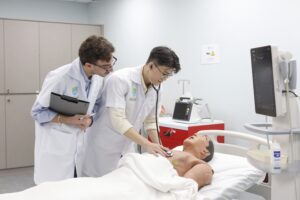
Becoming a cardiologist requires years of dedication, training, and a strong passion for heart health. Cardiologists are medical doctors who specialise in diagnosing and treating heart and blood vessel conditions. Their expertise is vital in helping patients manage cardiovascular diseases, prevent complications, and maintain a healthier life—a role that continues to evolve with emerging challenges and training recommendations in the field.
If you are aiming for a career that combines science, clinical care, and life-saving interventions, cardiology could be the right path for you.
Cardiologists specialise in diagnosing and treating heart-related conditions, such as coronary artery disease, arrhythmias, heart failure, and hypertension. They perform diagnostic tests, recommend treatments, and help patients manage their cardiovascular health through medication, lifestyle changes, or procedures.
Students who pursue a medical degree in Malaysia are well-prepared for future specialisation in cardiology through structured training and clinical exposure.
Here are the main steps involved in becoming a cardiologist:
Begin by completing pre-university studies such as A-Levels, STPM, IB Diploma, or a Foundation in Science programme. A strong academic background in biology, chemistry, and physics is essential.
Next, pursue a recognised medical degree in Malaysia or abroad. This typically involves five to six years of study covering basic sciences, clinical medicine, and hands-on hospital rotations.
Students at a top medical university in Malaysia receive extensive training that lays the foundation for a medical career.
After earning your degree, complete a two-year housemanship programme. This supervised clinical training allows you to rotate through different medical specialities, including internal medicine, surgery, paediatrics, and emergency care.
Cardiology is a subspecialty of internal medicine. Therefore, you must complete a residency programme in internal medicine, which typically takes three to four years. This stage focuses on managing a wide range of adult medical conditions.
After completing internal medicine training, enter a fellowship programme in cardiology, usually lasting another three years. During the fellowship, you receive advanced training in diagnosing and treating heart conditions, interpreting diagnostic tests, and performing interventional procedures.
Once training is complete, you must pass national or international certification exams to become a licensed cardiologist. Continuous education and recertification are often required to stay updated with evolving medical standards.

To succeed in cardiology, you must develop strong:
These skills are cultivated early in training at a reputable medical school in Malaysia.
After becoming a cardiologist, you can further specialise in areas such as:
Each subspecialty requires additional fellowship training.
Becoming a cardiologist is a long but highly rewarding journey that demands academic excellence, clinical expertise, and a genuine passion for patient care. Cardiologists play a crucial role in diagnosing and treating heart diseases, helping millions of people live longer and healthier lives.
Start your journey towards becoming a cardiologist by enrolling in a medical degree in Malaysia at RUMC, where high-quality education and clinical training pave the way for a successful career in heart care.
It usually takes about ten to fourteen years, including medical school, housemanship, internal medicine residency, and a cardiology fellowship.
Yes, after earning a medical degree in Malaysia, you can pursue postgraduate training in internal medicine and cardiology.
Yes, becoming a cardiologist requires years of rigorous study, clinical training, and a strong commitment to continuous learning.
The first step is completing pre-university qualifications, such as A-Levels or a Foundation in Science, followed by enrolling in a recognised medical degree programme.