
Becoming an Orthopaedic Surgeon: From Medical School to Specialisation

Orthopaedic surgery is a highly respected and hands-on medical speciality that focuses on treating disorders of the musculoskeletal system. Whether it’s setting broken bones, performing joint replacements, or correcting spinal deformities, orthopaedic surgeons restore mobility and improve quality of life for patients of all ages. The journey to becoming an orthopaedic surgeon is rigorous—but for many, it’s also incredibly rewarding.
In Malaysia, demand for orthopaedic specialists is on the rise, driven by high rates of trauma injuries, bone and joint problems, sports-related conditions, and an ageing population. If you’re aiming to enter this field, you’ll need to plan your academic path carefully—starting from pre-university studies to specialist certification.
Step 1: Start with a Foundation in Science
Your first step is enrolling in a foundation in science programme, usually one year in duration. This pre-university course equips students with the knowledge and skills needed to enter medical school. Key subjects include:
- Biology
- Chemistry
- Physics
- Mathematics
- Introduction to human anatomy and health sciences
By completing this foundation, students build the essential academic base for a future medical degree.
Step 2: Pursue a Medical Degree
The next phase is a five-year medical degree, where students gain theoretical knowledge and clinical skills. This programme is typically divided into:
Pre-clinical phase (Years 1–2):
You’ll learn core concepts in anatomy, physiology, pharmacology, pathology, and microbiology. The musculoskeletal system is a central topic, preparing you for future orthopaedic rotations.
Clinical phase (Years 3–5):
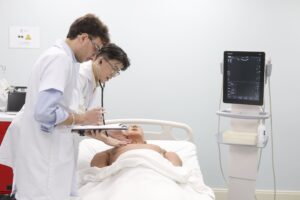
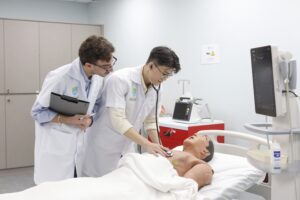
Students complete hospital-based training through clinical rotations. Orthopaedics is one of the core specialities you’ll rotate through, exposing you to fracture management, joint assessments, surgical procedures, and rehabilitation practices.
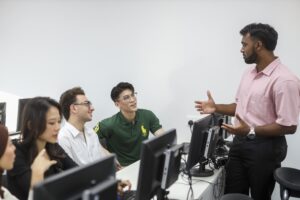
Some medical schools, like RUMC, offer international-standard training with early clinical exposure—giving students a stronger foundation for surgical disciplines like orthopaedics.
Step 3: Complete Housemanship (Internship)
After earning your MBBS or equivalent, you’ll enter a 2-year housemanship programme under the Ministry of Health Malaysia. During this time, you’ll rotate through key departments, including:
- Internal Medicine
- Surgery
- Obstetrics & Gynaecology
- Paediatrics
- Emergency Medicine
- Orthopaedics
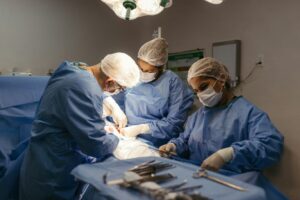
Your orthopaedic posting will involve hands-on tasks such as assisting with surgeries, managing trauma cases, and applying casts or braces. This is a crucial period for deciding whether to pursue orthopaedic specialisation.
Step 4: Apply for Specialist Training in Orthopaedics
Once you’ve completed your internship and obtained full medical registration, you can apply for orthopaedic training through one of two main pathways:
1. Master of Orthopaedic Surgery Programme
This structured, university-based programme typically lasts four years and involves coursework, clinical rotations, research, and surgical training. Entry is competitive and may require passing entrance exams and interviews.
2. Parallel Pathway
This route allows you to undergo supervised training in MOH-approved hospitals while preparing for international specialist exams (e.g., FRCS). It offers more flexibility but still involves structured assessments and evaluations.
Regardless of the path you choose, orthopaedic training covers areas such as:
- Trauma surgery and fracture fixation
- Joint replacement and arthroscopy
- Paediatric orthopaedics
- Spinal surgery
- Musculoskeletal oncology
- Sports injuries and rehabilitation
Step 5: Obtain Specialist Registration
After completing your specialist training and passing the required exams, you can apply for registration as a specialist orthopaedic surgeon with the National Specialist Register (NSR) of Malaysia. Once registered, you may practice as a consultant in public hospitals, join private practice, or pursue sub-speciality fellowships.
Optional Step: Subspecialise
Many orthopaedic surgeons choose to deepen their skills in areas such as:
- Spine surgery
- Joint reconstruction (e.g., hip and knee replacement)
- Sports medicine
- Hand and microsurgery
- Orthopaedic oncology
These fellowships typically last 1–2 years and are often pursued locally or overseas, depending on your interests and career goals.
Skills to Cultivate Along the Way
Becoming an orthopaedic surgeon requires more than just academic excellence. Important skills include:
- Manual dexterity – crucial for performing surgery
- Critical thinking – needed for evaluating injuries and planning treatment
- Physical stamina – to endure long procedures and emergency calls
- Communication – to coordinate with care teams and counsel patients
- Teamwork – collaboration is key in multidisciplinary hospital settings
Throughout your training, you’ll have opportunities to develop and refine these skills in both clinical and surgical settings.
Final Thoughts
Becoming an orthopaedic surgeon is a long-term commitment, but it’s also one of the most impactful and rewarding paths in medicine. With every procedure, you help patients regain mobility, independence, and quality of life.
To begin your journey, consider starting with a foundation in science and enrolling in a top-tier medical degree in Malaysia. From there, focus on clinical excellence, surgical skill, and lifelong learning to become a leader in musculoskeletal healthcare.
FAQs about becoming an orthopaedic surgeon
1. How many years does it take to become an orthopaedic surgeon in Malaysia?
It usually takes 11–13 years: 1 year for foundation, 5 years for a medical degree, 2 years of housemanship, and 4–5 years of specialist training.
2. Can I become an orthopaedic surgeon without a master’s degree?
Yes. The parallel pathway allows doctors to pursue training and sit for internationally recognised specialist exams instead of enrolling in a Master’s programme.
3. Do orthopaedic surgeons only perform surgery?
No. They also provide non-surgical treatments like joint injections, physiotherapy recommendations, and fracture management.
4. What’s the best way to prepare for an orthopaedic career?
Start with a foundation in science, pursue a medical degree, and gain early exposure to orthopaedic cases through rotations and internships.