Is MBBS a difficult degree to complete? The truth is: all medical degrees are demanding and stressful, but the difficulty is not only about academic rigour. MBBS feels hard because the workload is heavy, assessments are strict, and the pace rewards consistency more than last-minute effort.
Nonetheless, students who build strong study systems and emotional resilience often experience MBBS as manageable, while students who rely on cramming or who struggle with stress can find it overwhelming.
This breakdown explains what makes MBBS feel difficult, what parts are motivating, and what habits tend to separate students who cope well from students who burn out.
MBBS is hard because it combines three challenges at once. First, it has a large academic syllabus that requires daily effort. Second, it uses high-stakes assessments where small mistakes can have serious consequences. Third, it adds emotional pressure from time constraints, competition, and constant self-comparison. When those three pressures stack up, MBBS can feel like it takes over your life unless you build a routine that keeps you steady.
At the same time, MBBS is not uniformly hard in the same way for everyone. Some students describe the workload as “overrated” once they learn how to study efficiently. Others find it “tough” and “stressful” because the course punishes inconsistency. The main difference is usually not talent. It is study habits, discipline, and how well you recover when things go wrong.
MBBS often feels hardest at the start because the learning style changes dramatically. In pre-university, it is still possible to delay work and recover later. In MBBS, the syllabus grows too fast for that approach. When you fall behind, you quickly discover that you cannot catch up in one weekend.
The first year is also a mental adjustment. You move from studying for grades to studying for competence, and you are expected to absorb huge amounts of information even before you feel confident. Many students struggle not because the topics are impossible, but because they have never had to build a stable, repeatable study system before.
The first major reason MBBS feels hard is the volume of content. Students often describe being thrown into an “ocean of facts” because you cover a large syllabus across foundational subjects such as anatomy, physiology, and biochemistry early on. It is not unusual to feel like the reading never ends because you are expected to understand systems, mechanisms, and clinical relevance, not only memorise definitions.
The practical challenge is that MBBS content is interconnected. When one topic is weak, it affects your ability to understand later topics. This is why MBBS rewards consistency. The course feels less brutal when you treat learning as daily maintenance rather than a sprint before exams.
The second reason MBBS feels hard is that assessment standards can be strict. In some settings, missing a pass mark by a tiny margin can still result in failure. This creates pressure because small mistakes matter, and it can feel like the course is unforgiving.
MBBS assessments also do not depend on one exam type. You must perform across different formats. Written exams test knowledge and clinical reasoning. MCQs can punish careless reading. Modified essay questions require structured thinking under time pressure. Practical stations such as OSCEs test performance, communication, and clinical skills in real time.
This variety makes MBBS difficult because it is not enough to “know the notes.” You have to show that you can apply knowledge, communicate clearly, and stay composed under observation.
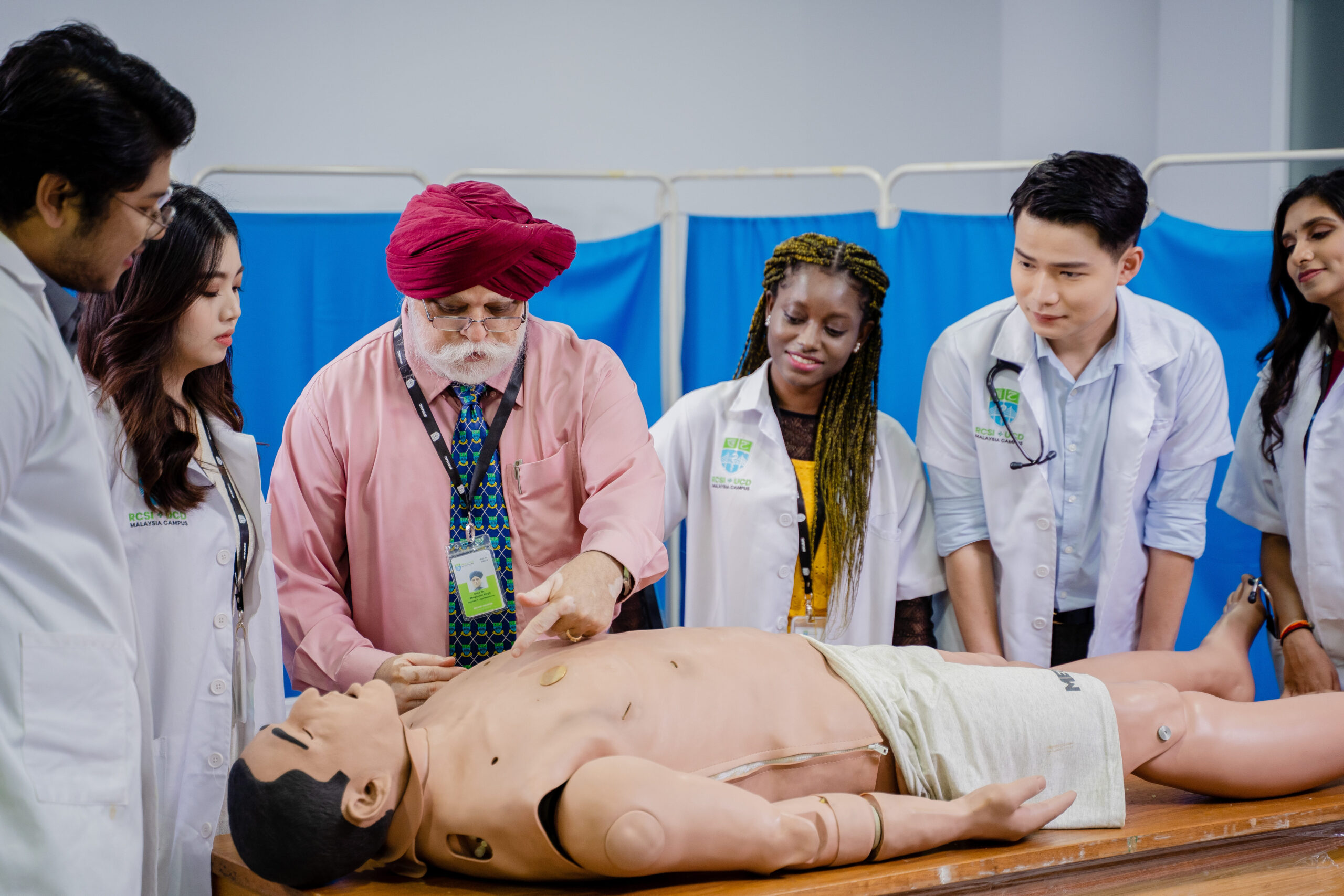
OSCEs feel stressed because they test you in a public way. Instead of writing answers privately, you demonstrate clinical tasks at stations where time is limited, and performance is observed. Even students who are strong academically can feel anxious because OSCEs expose weaknesses quickly. The experience is intense because you cannot hide behind memorisation. You must be able to do the skill, explain it, and communicate professionally while staying calm.
OSCE stress is also connected to practice time. Students who rehearse repeatedly, especially with peers, usually cope better because the exam becomes familiar. Students who “read about” skills without practising often feel overwhelmed when they must perform the skill live.
MBBS is not only hard academically. It can also be hard emotionally. Some students describe the first year as lonely, especially when they struggle to find friends who feel supportive. This can be more challenging for introverts or students who come from environments where they already had established social circles.
Social stress can become a real burden when combined with academic pressure. Toxic environments, rumours, or difficult batch dynamics can increase anxiety. When your mind is already overloaded with studying, social conflict can reduce focus and make you feel unsafe or unsupported. This is why having even one reliable support system matters, whether it is a small group of friends, a mentor, or family.
MBBS creates burnout when students rely on bursts of extreme effort instead of steady routines. Many students describe falling into “autopilot mode,” where days blur together and motivation drops. Burnout often begins when you feel behind and start believing you can “fix it later.” That belief breaks in MBBS because the syllabus keeps moving.
The solution is not studying every waking hour. The solution is studying consistently enough that you do not panic. When you maintain daily progress, your stress stays within a manageable range. When you neglect daily progress, your stress spikes and your performance becomes unstable.
Clinical exposure is one of the most motivating parts of MBBS because it reminds you why you started. Early patient contact can be powerful. It helps students connect theory to real life and makes studying feel meaningful.
Some experiences become defining moments. Dissecting a cadaver can feel like a major professional threshold because it makes anatomy real. Witnessing life events such as a birth during a C-section can be unforgettable. These experiences often become the emotional fuel that helps students push through difficult weeks.
At the same time, clinical training creates a reality check. Students may feel like “doctors” during postings, but they also realise early on that they still lack procedural confidence. That gap is normal. Clinical competence develops slowly through repetition, supervision, and time.
MBBS feels hard partly because students eventually learn that graduation is not the final hurdle. In Malaysia, housemanship is widely described as the toughest phase, with intense schedules and long work weeks. Knowing that housemanship comes next can add pressure because you are not only studying to pass. You are studying to function safely in a demanding clinical environment.
Long-term planning also matters. Specialisation is not a short road. Becoming a specialist can take many years after starting MBBS, and some pathways include competitive requirements and time constraints. This means MBBS should be viewed as the foundation stage of a longer professional journey, not the endpoint.
MBBS becomes more manageable when your study system matches the demands of the course. The most reliable strategies focus on learning that sticks, rather than learning that looks impressive.
Active recall is effective because it forces you to retrieve information instead of rereading it passively. Spaced repetition is effective because it reinforces memory over time instead of relying on last-minute cramming. Together, these methods reduce panic before exams and improve long-term retention, which is critical for clinical years.
Consistency is the habit that makes everything else work. Studying a little every day is usually more sustainable than “hero sessions” that trigger burnout. A daily routine also protects your mental health because it reduces uncertainty and keeps you from feeling trapped.
Balance also matters. It is possible to keep hobbies and a social life in MBBS, but it requires boundaries and discipline. Some students aim for a stable pass level so they can protect sleep, relationships, and health. Others aim for top grades and accept tighter trade-offs. The key is choosing a strategy intentionally, instead of drifting into exhaustion.
So, is MBBS hard? Yes, MBBS is hard because it demands continuous learning, strict assessments, emotional resilience, and steady performance over the years. It becomes significantly harder when you rely on cramming, isolate yourself, or ignore burnout signals. It becomes more manageable when you use active recall and spaced repetition, study consistently, practise clinical skills early, and build a support system that keeps you grounded.
If you are considering MBBS, your best next step is to evaluate your study habits honestly. Build a daily routine before the course begins, and plan how you will protect sleep, mental health, and consistency once the workload increases.
If you are thinking about MBBS now, the programme you choose will shape how manageable the workload feels over five years. A strong medical school reduces avoidable stress by providing a clear structure, early clinical exposure, and support that helps you stay consistent during demanding phases.
RCSI & UCD Malaysia Campus (RUMC) is a top medical school that delivers Malaysia’s only Irish transnational medical degree, with pre-clinical training in Dublin and clinical years in Penang. Accredited by the Malaysian Medical Council (MMC) and Irish Medical Council (IMC), it is fully English-taught, offers early clinical exposure and scholarships, and supports AMC, USMLE, and global licensure pathways.
RUMC’s Undergraduate Medicine programme leads to the MB BCh BAO qualification over five years. You complete 2.5 years in Dublin for pre-clinical systems-based training, then 2.5 years in Penang for clinical rotations and hospital-based learning, with intakes each September.
Make an enquiry with RUMC to see how this pathway fits your learning style, your MBBS timeline, and your long-term registration goals.