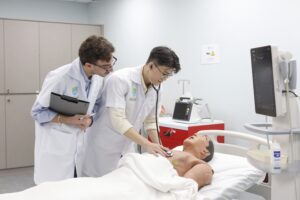
Mental health issues are a growing concern in Malaysia, with Ministry of Health data showing that 1 in 3 Malaysians face mental health challenges. This rising awareness highlights the urgent need for qualified mental health professionals.
Psychiatry is a vital and respected medical speciality focused on diagnosing, treating, and preventing mental and emotional disorders. It plays a critical role in strengthening Malaysia’s healthcare system and offers both personal fulfilment and professional reward.
Whether you are drawn to patient care, public health, or academic research, psychiatry provides a diverse and rewarding professional journey. This guide explores the career pathways, specialisations, skills, and education routes needed to begin a successful psychiatry career in Malaysia.
Psychiatrists are licensed medical doctors specialising in mental health. They work with individuals across all age groups to treat mental illnesses using a combination of psychotherapy, medication, and medical care. Their ability to develop personalised treatment plans uniquely positions them to support long-term recovery and emotional wellbeing.
They are trained to manage complex cases and guide patients through treatment plans tailored to their specific needs. This personalised approach not only supports individual recovery but also contributes to broader community wellbeing.
Psychiatry offers many subspecialties, allowing practitioners to focus their expertise in specific areas:
Child and Adolescent Psychiatry supports minors in schools and community settings. Geriatric Psychiatry manages age-related mental conditions in older adults within care facilities.
Forensic psychiatrists work within the legal system. They assess criminal responsibility, provide treatment to incarcerated individuals, and offer expert court testimony.
This field treats conditions linked to substance use and behavioural addictions. It combines therapy and medication to support lasting recovery.
Emergency psychiatrists handle acute mental health crises in hospital settings, stabilising individuals through immediate assessment, counselling, and treatment.
Inpatient psychiatrists treat individuals requiring hospitalisation. They coordinate comprehensive, round-the-clock care in psychiatric wards.
This subspecialty supports individuals with long-term intellectual or physical disabilities alongside mental health conditions, often in partnership with caregivers and community services.
These professionals focus on population-level mental health, shaping policy and promoting systemic change in schools, workplaces, and correctional facilities.
Military psychiatrists treat active-duty personnel and veterans, managing PTSD, trauma, and stress-related conditions within military systems.
Administrative psychiatrists oversee mental health operations within institutions, ensuring alignment between clinical best practices and organisational goals.
Psychiatric researchers investigate mental disorders and treatment outcomes, producing evidence-based insights that advance the profession.
To become a psychiatrist in Malaysia, students must first complete a recognised medical degree, such as the undergraduate medicine programme from RUMC. Afterwards, they must undergo two years of housemanship followed by another two years of compulsory service with the Ministry of Health (MOH).
Those who wish to specialise in psychiatry will then enter a four-year postgraduate training programme. This includes structured clinical training, supervised practice, and national assessments. Successful candidates must register with both the Malaysian Medical Council (MMC) and the National Specialist Register (NSR) to practise independently.
This entire process ensures psychiatrists are equipped with both general medical knowledge and specialised expertise in mental health care.
Recent studies show that a career in psychiatry requires more than medical knowledge. Empathy, resilience, and the ability to communicate clearly are just as important. Psychiatrists often lead multidisciplinary teams and manage emotionally complex situations, requiring sound judgment and a strong ethical foundation.
They are frequently faced with challenging decisions, where balancing patient autonomy, confidentiality, and clinical effectiveness becomes crucial. These ethical considerations are fundamental to maintaining trust and delivering responsible, compassionate care.
Finding your place within psychiatry involves exploring areas where your interests and strengths align, whether it’s working with children, contributing to research, or shaping public policy. Mentorship and hands-on experience during medical training can help clarify your direction.
In Malaysia, the average salary for a psychiatrist is around RM296,000 annually, according to Salary Expert (as of writing). The increasing demand for mental health services ensures long-term job stability and the opportunity to make a real difference in people’s lives.
Are you driven to make a real impact in mental healthcare? Begin your journey with RUMC’s internationally recognised medical programme.
RCSI & UCD Malaysia Campus (RUMC) is a medical school in Malaysia offering a globally recognised Irish medical degree. Pre-clinical years are delivered fully in Ireland, followed by clinical training in Penang. Students benefit from affordable tuition, strong graduate outcomes, and experienced faculty.
Apply now and explore scholarship opportunities to support your path toward a fulfilling psychiatry career.
A psychiatrist is a medical doctor who diagnoses, treats, and helps prevent mental health disorders through psychotherapy, medication, and personalised treatment plans. They work with individuals across different age groups in hospitals, clinics, and community settings.
The average salary for a psychiatrist in Malaysia is around RM296,000 per year, with senior specialists earning more depending on experience, location, and sector.
Becoming a psychiatrist typically takes 10–12 years, including a recognised medical degree (5 years), housemanship (2 years), compulsory MOH service (2 years), and postgraduate psychiatry training (4 years).
Psychiatrists are medical doctors who can prescribe medication and provide medical treatment, while psychologists focus on therapy and behavioural interventions but do not prescribe medication. Both play crucial roles in mental healthcare.