
Best Pathways to MBBS in Malaysia: A Complete Guide

The dream of donning a white coat and swinging a stethoscope around one’s neck is a noble ambition that many students cherish from a young age. However, the journey to becoming a doctor is not merely about prestige; it is a rigorous marathon that demands exceptional academic results, unwavering dedication, and years of hands-on training.
In Malaysia, this professional path is highly structured and regulated to ensure that only the most competent individuals are entrusted with human lives. Understanding the precise steps from secondary school to full registration is essential for any aspiring medical professional to succeed.
The Standard Roadmap: A Step-by-Step Overview
The roadmap to becoming a registered doctor in Malaysia is a highly regulated, step-by-step journey that ensures all practitioners are academically and clinically prepared for the responsibilities of the profession. The basic academic and professional pathway is as follows:
- Complete a pre-medical program such as A-Levels, STPM, or a Foundation in Science for one to two years after secondary school.
- Enrol in a five-year MBBS or MD degree at an institution that is fully recognised and accredited by the Malaysian Medical Council.
- Undergo two years of housemanship, which is a compulsory clinical internship involving rotations through major hospital departments.
- Apply for full registration with the Malaysian Medical Council to officially obtain the title of “Doctor” and practice as a medical officer.
- Fulfil two years of compulsory service within the public healthcare system as required by the government.
- Pursue optional postgraduate specialisation through four to five years of further study and additional supervised training in a specific medical field.
Meeting the Crucial Entry Requirements
Entry requirements for medical degrees in Malaysia are strictly regulated by the Malaysian Medical Council (MMC) to ensure students possess the necessary academic foundation and personal suitability for the profession.
- SPM / O-Level: At least 5Bs in core subjects, including Biology, Chemistry, Physics, and Mathematics or Additional Mathematics.
- A-Level / STPM: Achievement of BBB, ABC, or AAC in three subjects: Biology, Chemistry, and either Physics or Mathematics. Alternatively, for STPM, a minimum CGPA of 3.0 is required in the same three science/math subjects.
- Foundation in Science / Matriculation: A minimum CGPA of 3.00 (out of 4.0) in three subjects: Biology, Chemistry, and either Physics or Mathematics.
- Diploma in Health Sciences: A minimum CGPA of 3.5. The diploma must be at least 5 semesters (2.5 years) long and completed at a single institution.
- English Language Proficiency: Mandatory benchmarks include a MUET Band 4 or an IELTS score of 6.0.
What Does a Medical Degree Look Like?
A standard MBBS or MD degree in Malaysia takes 5 years to complete. Studying a medical course is a rigorous, highly structured journey that moves from academic theory to hands-on clinical practice.
The Structure of a Medical Course
In Malaysia, a medical degree curriculum is typically divided into two distinct phases:
- Phase 1 (Pre-clinical): This phase covers the first two years and is primarily academic. You will focus on learning the theoretical basics of medical science through integrated teaching in a university setting.
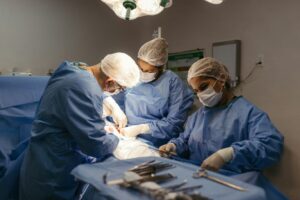
- Phase 2 (Clinical Training): Spanning the final three years, this phase moves from the classroom to teaching hospitals and clinics. You will participate in clinical rotations and clerkships, gaining hands-on experience managing actual patients under supervision.
- Post-Graduation (Housemanship): After earning your degree, you are required to undergo a two-year compulsory internship known as housemanship in a government hospital. During this period, you rotate through major departments like medicine, surgery, and paediatrics to develop the practical competence needed for full registration
Subjects Studied in a Medical Degree
The curriculum is designed to provide a comprehensive foundation in human biology and medical practice.
- Pre-clinical Subjects: During the first phase, you will study fundamental sciences such as Anatomy, Biochemistry, Microbiology, Pharmacology, Pathology, and Clinical Medicine.
- Clinical Disciplines: In the clinical phase, you will rotate through various specialities, including General Medicine, Surgery, Paediatrics, Obstetrics & Gynaecology, Orthopaedics, and Emergency Medicine.
Cost of Studying Medicine
The total financial commitment for a five-year MBBS degree in Malaysia typically ranges from RM 250,000 to RM 650,000. This cost is heavily influenced by the type of institution selected, with public universities (IPTA) being the most affordable option for Malaysian citizens due to government subsidies, often costing between RM 20,000 and RM 30,000 per year. Conversely, private universities (IPTS) and international branch campuses command significantly higher fees, with annual tuition typically ranging from RM 60,000 to over RM 110,000.
Journey to becoming a doctor in Malaysia
The journey to becoming a fully registered doctor in Malaysia is a structured and rigorous process that typically takes between 8 to 9 years after completing secondary school (SPM or O-Levels).
Phase 1: Pre-Medical Foundations
The path begins with achieving specific academic standards at the secondary level.
- SPM/O-Level Requirements: Students must obtain at least 5Bs in core subjects, including Biology, Chemistry, Physics, and Mathematics or Additional Mathematics. A pass in Bahasa Melayu and Sejarah is mandatory for those who intend to fulfil government service requirements later.
- Pre-University Studies: After SPM, students must complete a 1- to 2-year pre-university program such as A-Levels, STPM, Matriculation, or a Foundation in Science.
Phase 2: The Medical Degree (MBBS/MD)
Once the pre-university requirements are met, students enrol in a medical program recognised by the Malaysian Medical Council (MMC).
- Duration: The degree typically lasts 5 years.
- Structure: Studies are usually divided into two phases:
- Pre-clinical (Phase 1): The first 2 years focus on theoretical basics like anatomy and biochemistry in an academic setting.
- Clinical Training (Phase 2): The final 3 years involve hands-on clinical rotations at hospitals to gain practical experience with patients.
Phase 3: Housemanship (Internship)
Upon graduation, new doctors must apply for Provisional Registration with the MMC to begin their housemanship.
- Clinical Rotations: A 2-year compulsory internship at government hospitals.
- Training Structure: Housemen rotate through six different departments for four months each, including internal medicine, paediatrics, surgery, orthopaedics, and obstetrics & gynaecology, plus one elective such as emergency medicine or psychiatry.
- Goal: Ensure graduates can practice competently and safely within the Malaysian healthcare system.
Phase 4: Full Registration and Compulsory Service
After successfully completing housemanship, practitioners can apply for Full Registration with the MMC. Following full registration, doctors are required to serve a minimum of 2 years of compulsory service within the public healthcare sector (government hospitals or clinics). Note: Some statutory documents indicate this period as not less than three years.
Phase 5: Specialisation (Optional)
For those wishing to become specialists (e.g., cardiologists or surgeons), additional steps are required:
- Postgraduate Study: This involves another 4 to 5 years of academic study.
- Specialist Training: An additional 2 to 4 years of supervised specialist training is required, depending on the field.
- Final Registration: Once all criteria are met, the practitioner can register as a specialist with the MMC.
Top MBBS institutions in Malaysia
The following institutions are compiled based on their recognition by the Malaysian Medical Council (MMC), international rankings, historical reputation, and hospital affiliations:
- Universiti Malaya (UM): Known for its high international ranking and its teaching hospital, University Malaya Medical Centre (UMMC).
- Universiti Kebangsaan Malaysia (UKM): A research-oriented public university with its own large teaching hospital (HCTM).
- Universiti Sains Malaysia (USM): Recognised for research excellence and community-oriented education at its Health Campus in Kelantan.
- International Medical University (IMU): Malaysia’s pioneer private medical university, well-known for its unique twinning programs that allow students to transfer to partner universities in the UK, Australia, Ireland, or Canada.
- RCSI & UCD Malaysia Campus (RUMC): A unique and prestigious institution that offers a world-class medical education through a high-value twinning pathway, with 2.5 years of pre-clinical studies in Ireland and 2.5 years of intensive clinical training at local teaching hospitals in Penang.
Securing Your Future in Medicine with RUMC
Ultimately, choosing the right medical pathway in Malaysia is about finding a strategic balance between your personal aspirations, financial capabilities, and the rigorous standards set by the Malaysian Medical Council. While the road is an intensive marathon spanning nearly a decade, starting with a strong accredited foundation is the most critical step to ensuring your future degree is recognised for practice. While the journey is long, it is one that offers the unique privilege of serving society and making a profound impact on the health of your community.
For students seeking a world-class education with a global reach, RCSI & UCD Malaysia Campus (RUMC) offers a prestigious and unique high-value twinning pathway. This program provides a guaranteed spot to complete the first 2.5 years of pre-clinical studies in Ireland at either the Royal College of Surgeons in Ireland (RCSI) or University College Dublin (UCD) before returning to Penang for 2.5 years of clinical training. Graduates are awarded an internationally recognised medical degree from the National University of Ireland (NUI), which holds dual accreditation from both the MMC and the Irish Medical Council (IMC).
Enquire today to learn more about the 2026/2027 intake and take the first step toward joining a noble profession at a top-tier medical university.