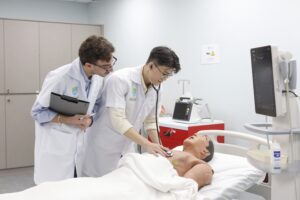
Psychiatry is one of the most rewarding and in-demand medical specialties in Malaysia today. With mental health concerns on the rise, the country urgently needs qualified professionals who can diagnose, treat, and support individuals through complex psychological challenges.
If you’re driven by a desire to understand the human mind and make a meaningful impact, psychiatry offers a fulfilling and respected career path.
This guide walks you through every step of the journey, from studying medicine at institutions to specialising in psychiatry, obtaining licensure, and advancing your career.
Psychiatrists are licensed medical doctors who assess, diagnose, and treat mental health conditions. They are distinct from psychologists in that they can prescribe medication, reflecting their medical training. Psychiatry plays a vital role in public health, addressing the complex mental, emotional, and behavioural challenges faced by individuals across all ages.
For students passionate about mental health but not pursuing a medical degree, career paths such as clinical psychology, psychiatric nursing, and clinical social work offer meaningful alternatives. These professionals contribute to the broader mental healthcare system through therapy, counselling, and patient support, though they cannot prescribe medication.
To become a psychiatrist in Malaysia, the following steps are required.
The journey begins with a recognised MBBS degree. This typically takes five years of full-time study and combines strong clinical exposure with academic foundations. Entry into medical school is competitive, requiring excellent results in STPM, A-Levels, Matriculation, or a Foundation in Science. Core subjects generally include Biology and Chemistry.
Some students may need to sit for admissions tests such as UCAT or university-specific assessments. Volunteering in mental health or healthcare settings is highly encouraged to strengthen both applications and career motivation.
Upon graduation, new doctors undergo two years of housemanship, rotating through core clinical disciplines including psychiatry, internal medicine, surgery, and paediatrics. This period helps build essential skills and allows aspiring psychiatrists to gain early exposure to the mental health field.
After housemanship, doctors typically gain further experience as Medical Officers, often within psychiatric units, before applying to a Master of Psychiatry programme at a recognised public institution in Malaysia. This four-year specialist training combines clinical rotations, academic instruction, and research.
During the programme, trainees gain broad exposure to various psychiatric areas including general adult psychiatry, child and adolescent psychiatry, and community mental health. Upon completing the course, candidates undergo gazettement by the Ministry of Health and become officially recognised specialists.
Following specialist certification, psychiatrists may apply for Ministry of Health-approved subspecialty fellowships, which typically last between one and two years. Subspecialties may include child and adolescent psychiatry, forensic psychiatry, and addiction psychiatry. These programmes offer advanced training and allow psychiatrists to take on more complex academic and leadership roles.
All psychiatrists must be registered with the Malaysian Medical Council (MMC). Once gazetted as specialists, they must also register with the National Specialist Register (NSR). To maintain NSR status, psychiatrists are required to participate in Continuing Professional Development (CPD) through courses, conferences, research, and supervised practice.
Successful psychiatrists combine clinical expertise with strong interpersonal skills. Compassion, patience, and the ability to communicate clearly with patients from diverse backgrounds are essential. Emotional resilience, sound judgement, and a commitment to confidentiality further support effective psychiatric care.
Psychiatrists in Malaysia are well-compensated due to their extensive training and the growing demand for mental health services. According to Salary Expert, the average annual salary for a psychiatrist is approximately RM296,000, while senior specialists may earn over RM385,000 (as of writing).
Career advancement may include roles in consultancy, hospital leadership, teaching, research, or policy development.
If you want to make a difference through medical healthcare, begin your journey with a world-class medical education at RUMC.
RCSI & UCD Malaysia Campus (RUMC) is a medical school in Malaysia offering a globally recognised Irish medical degree with pre-clinical training in Dublin and clinical training in Penang. With internationally recognised training and strong clinical exposure, RUMC equips future doctors with the foundation to specialise in high-impact fields like psychiatry.
Explore our Undergraduate Medicine programme today and shape the future of mental healthcare.
It typically takes 11–13 years to become a psychiatrist in Malaysia. This includes five years of MBBS study, two years of housemanship, four years of specialist training (Master of Psychiatry), and additional time for gazettement and optional subspecialty training.
A psychiatrist is a medical doctor who can diagnose mental illnesses and prescribe medication, while a psychologist holds a non-medical degree and focuses on psychotherapy and behavioural interventions. Only psychiatrists undergo medical school and clinical rotations.
Psychiatrists in Malaysia earn an average salary of around RM296,000 per year, with senior specialists earning over RM385,000 annually. Salaries vary based on experience, subspecialty, and sector (public or private).
Not directly. A psychology degree does not qualify you for psychiatry. You must complete an MBBS and undergo medical training to become a psychiatrist in Malaysia. However, psychology graduates may pursue roles in mental health through other paths like clinical psychology.